01 / Context
Making agent execution inspectable.
Pandora is my independent environment for AI-assisted engineering and operational automation. It connects durable task context, coding agents, integrations and execution records so work can be reviewed and continued across sessions.
My contribution
I structure workflows, task constraints, acceptance criteria and integration requirements, and review and verify agent-assisted changes. Claude Code and Codex support implementation. The operational examples below describe documented work in this environment, rather than sole authorship of every underlying change.
The system is used in my personal engineering environment. The case distinguishes observed operation from tested components and planned capabilities.
02 / Platform approach
Define the task and the evidence together.
A task needs more than a prompt: it needs scope, execution constraints and a definition of a verifiable result. Versioned Markdown preserves decisions; reviewable changes and execution records connect the instruction to what actually happened.
I use Claude Code and Codex for repository analysis, planning, code changes and documentation. The review loop is part of the workflow: a successful tool call is evidence of execution, while acceptance depends on the resulting behavior.
03 / Reliability case
Two failure modes behind repeated MCP startup.
An August 10, 2026 operational record documents gateway memory pressure alongside repeated startup of a payment-service MCP integration. Investigation identified two distinct problems: an invalid launcher generated continuous retries and child processes; concurrent discovery could create duplicate server instances before registration completed.
Launcher failure
A compatible adapter using the stable application checkout replaced the missing launcher. The record reports no new MCP failures after that intervention in its observation window, without restarting the gateway.
Discovery race
The discovery filter considered registered servers, but did not reserve ownership for a connection still being established. Another discovery pass could start the same server again.
Treat “connecting” as an owned state
The recorded correction made the in-progress connection registry count as active ownership. Discovery would no longer regard that server as available for another startup just because registration was incomplete.
Before
- Discovery starts a server connection.
- Registration is still incomplete.
- A second discovery can start another instance.
After
- A connection in progress counts as owned.
- Discovery excludes that server from new startup.
- Registration completes for the existing instance.
Simplified explanation of the documented discovery fix, not a complete concurrency algorithm. Duplicate MCP processes are distinct from duplicated payment transactions; this record establishes the former.
| Check | Observation | What it establishes |
|---|---|---|
| Discovery correction | Three focused tests passed. | Coverage of the corrected behavior in the focused suite. |
| Planned restart | Health recovered; one MCP instance was observed. | The change was activated and the intended process state was observed. |
| Restart verification | The first 90-second check expired; the service subsequently converged. | The verifier’s timing did not match the actual startup budget. |
| Timeout adjustment | Verification budget changed to 150 seconds; policy test passed. | The check was aligned with the service’s startup allowance. |
Resource limits were applied as a separate containment measure. They bounded the process footprint; they did not replace the launcher and concurrency fixes. Long-term session and concurrency budgets remained follow-up work in the record.
04 / Observability
Test the operation people depend on.
A related incident exposed a different gap: trace ingestion continued, but Tempo searches returned HTTP 500 because the process referenced missing WAL blocks. A running container and successful ingestion were insufficient evidence that engineers could investigate an execution.
After the current WAL block completed, a restart was limited to Tempo. The recorded verification included a successful search returning five recent traces and retrieval of a trace by ID. Other observability services were left running.
Mitigation versus resolution
Search was restored. The cause of the orphaned references and a dedicated search-failure probe remained unresolved. That distinction matters when deciding whether to close an incident or continue monitoring it.
Sources: internal operational diary and Tempo incident record, August 10–11, 2026. These are historical observations, not a current uptime or reliability guarantee.
05 / Quality & rollout
Keep quality evidence attached to execution.
Pandora’s model-portfolio code includes post-execution quality evidence and task scoring. Its cost-sampling logic rejects incomplete usage records instead of treating unknown cost as zero, and distinguishes measured from estimated cost. This is a concrete accounting boundary, not proof of a complete production evaluation platform.
Implemented and testable
Recorded orchestration foundations include typed task contracts, eligibility checks, capacity reservations, scheduling and circuit breakers.
Activation is a separate claim
The July implementation record explicitly placed those foundations outside the production execution path. Passing tests and publishing code did not establish production adoption.
For a shared agent platform, the next quality layer would be a versioned task dataset, explicit success and failure labels, and repeatable comparisons across prompt or model changes. That is a future validation direction here, not a claimed deployed capability.
06 / Developer experience
Make the next investigation easier.
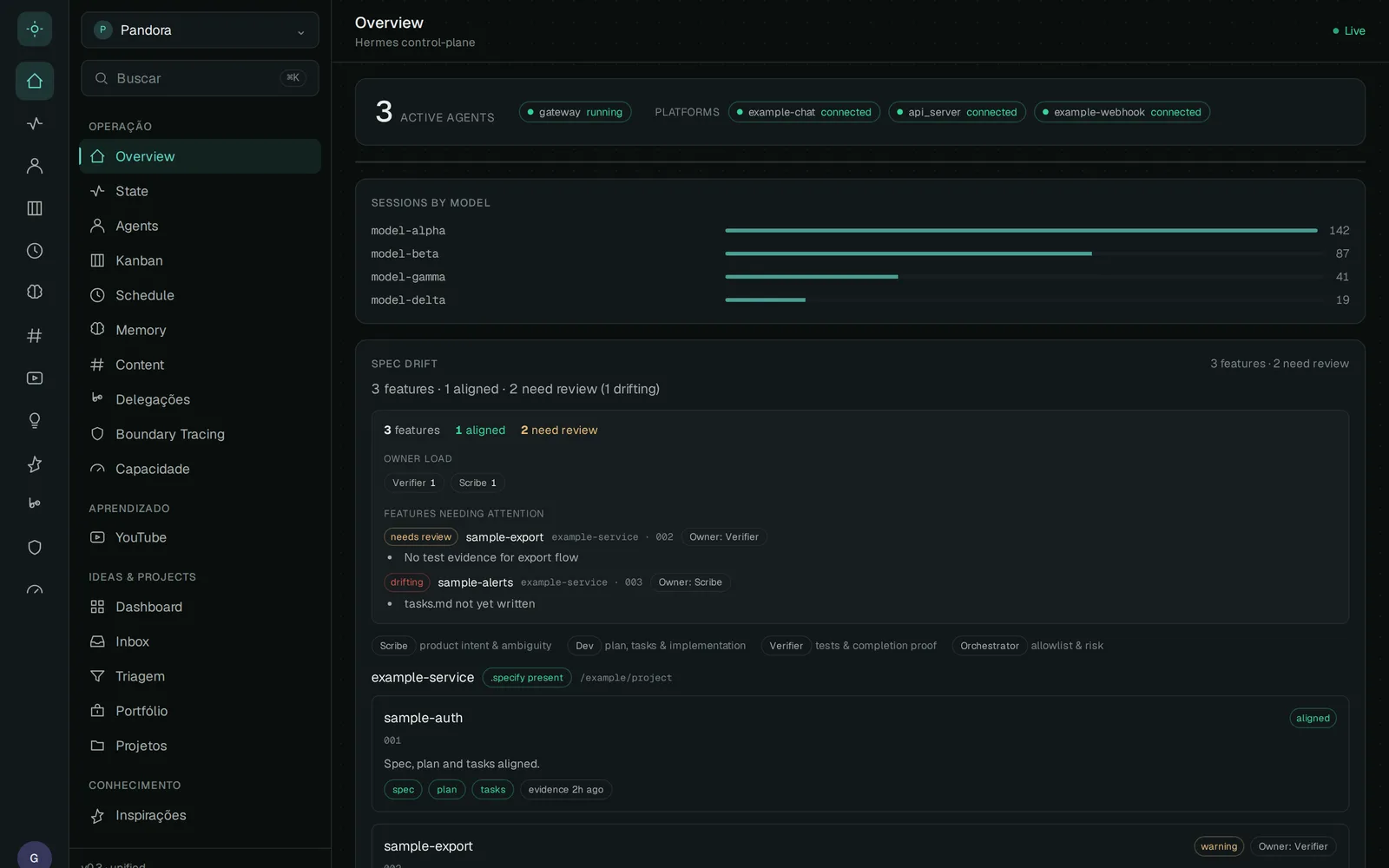
My product and frontend background shapes how I approach operational tools: make state understandable, keep contracts explicit, and help the next engineer find the relevant evidence. The value of a console is the investigation it enables.
These cases reinforced three practices: distinguish in-progress work from absent work, verify the operation rather than just process health, and keep mitigation, testing and rollout as separate states.
Download agent workflows résumé